Anatomy of Bingo
With Body Shop for Moving Parts, 2026
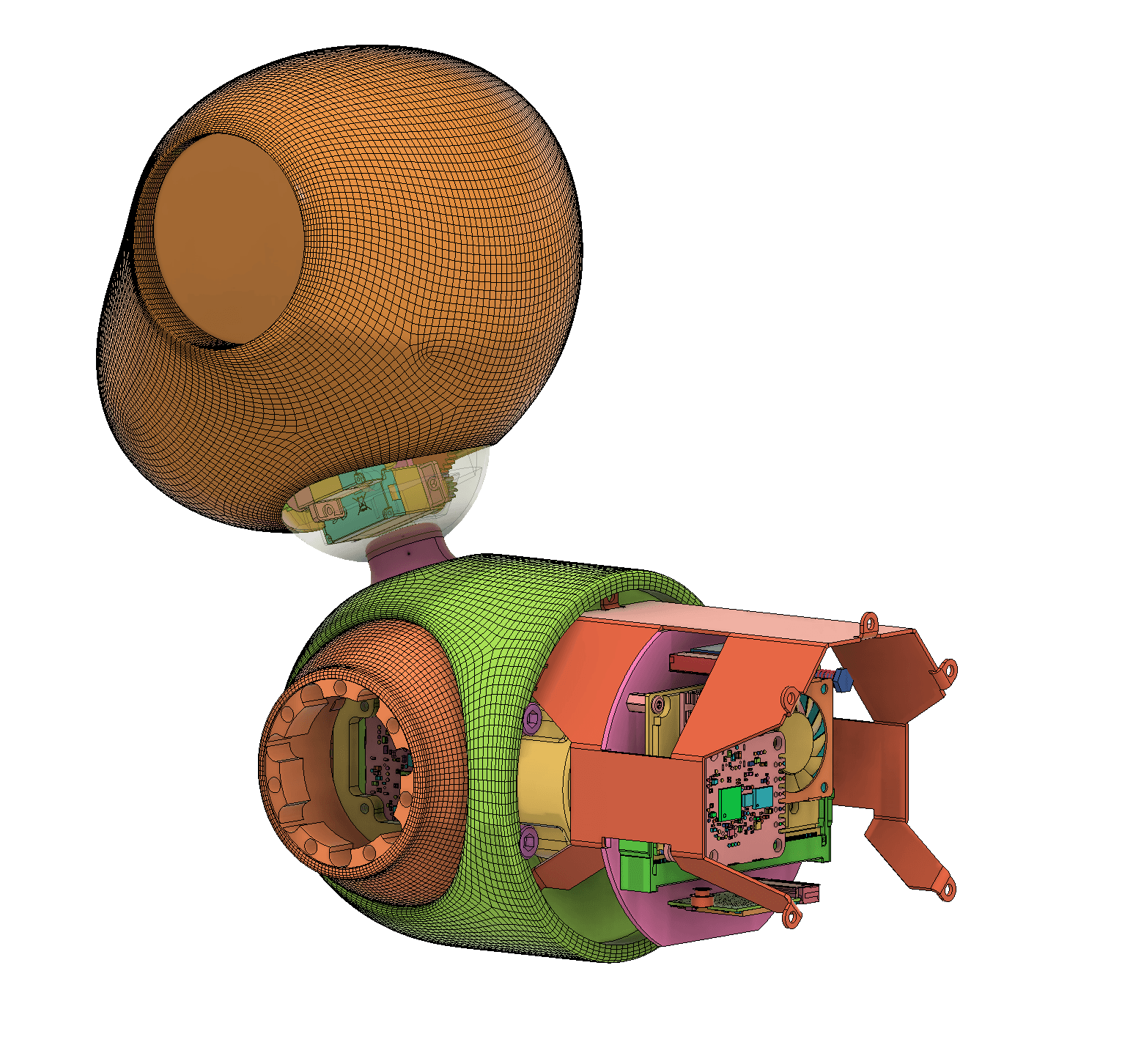
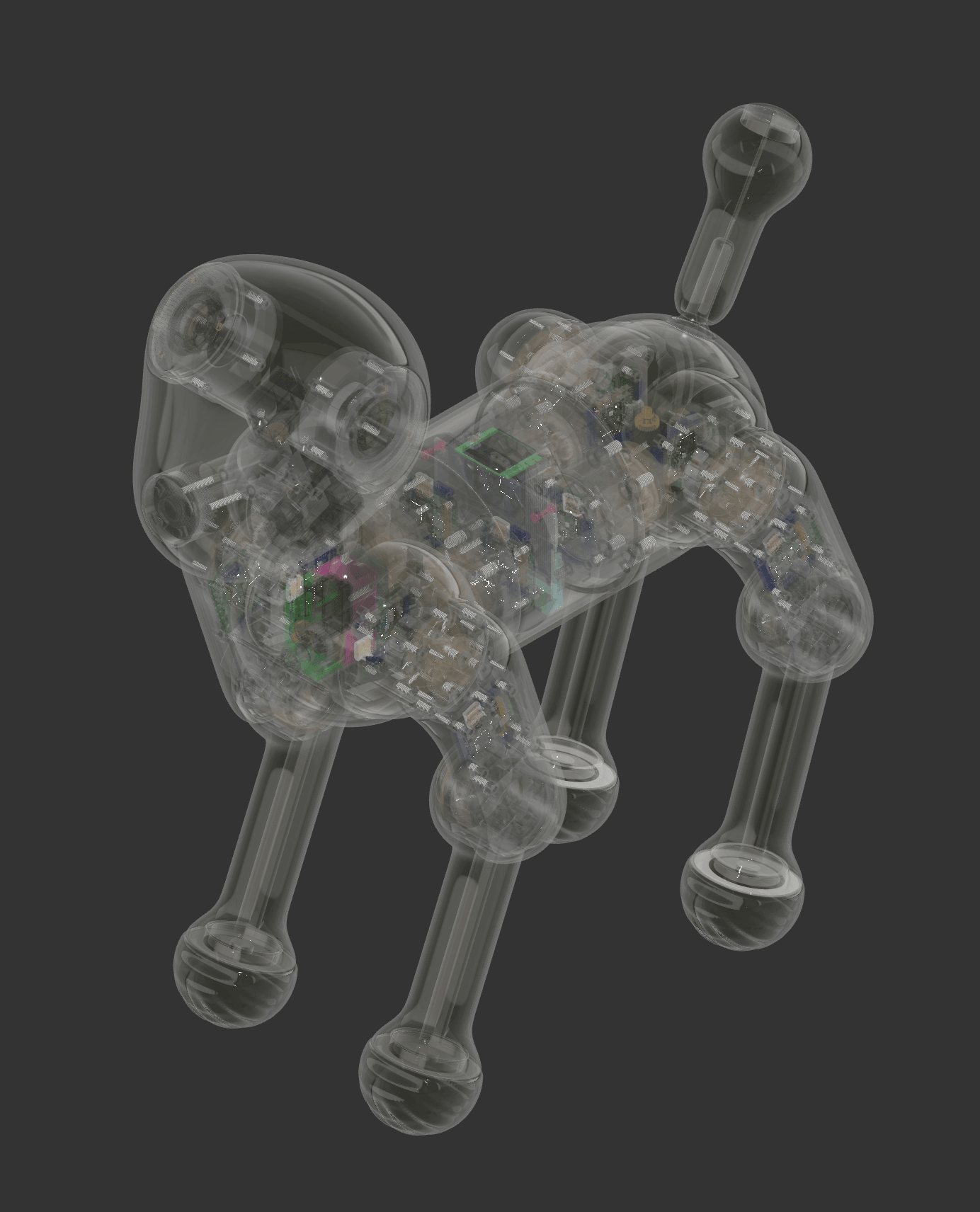
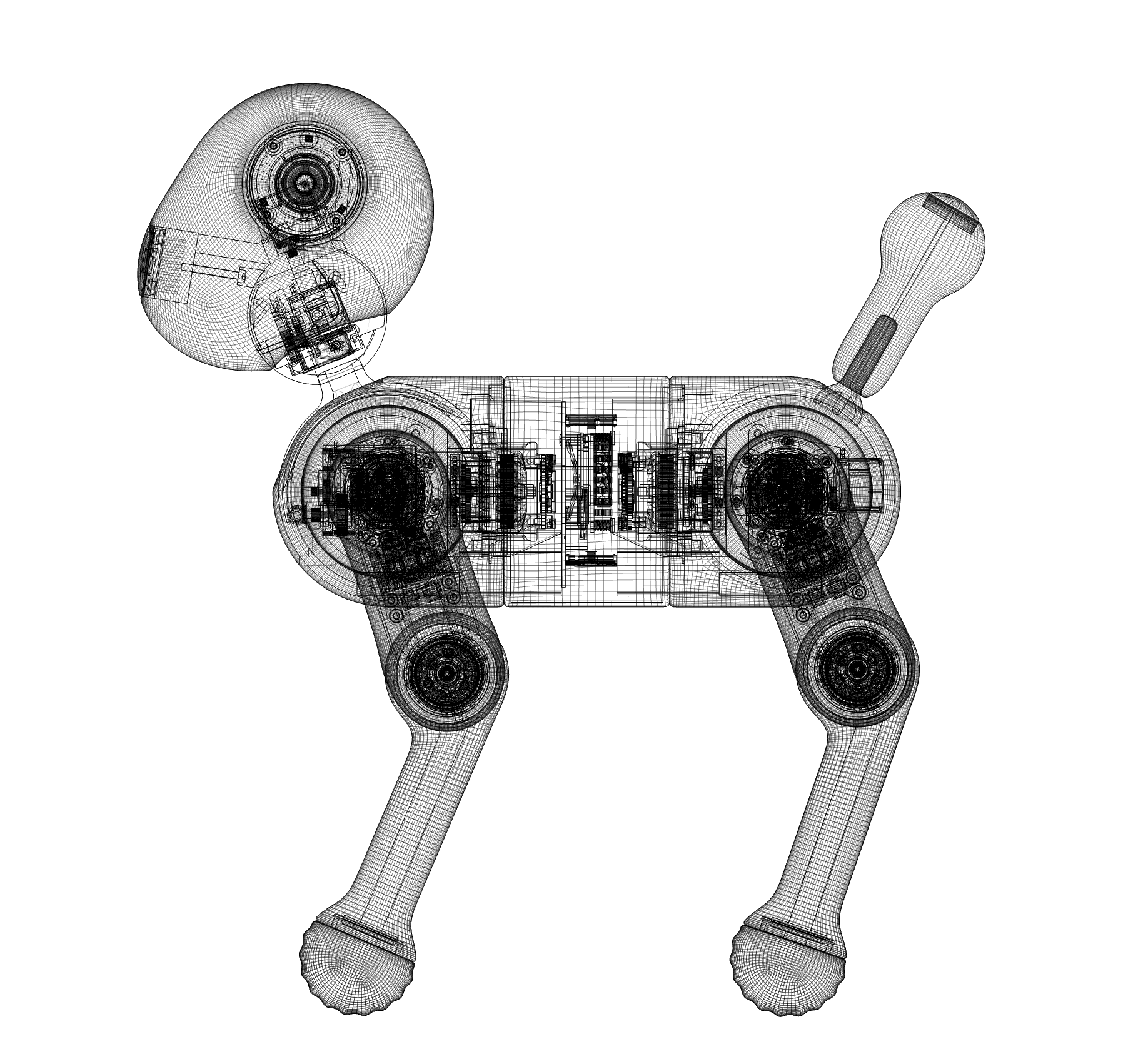
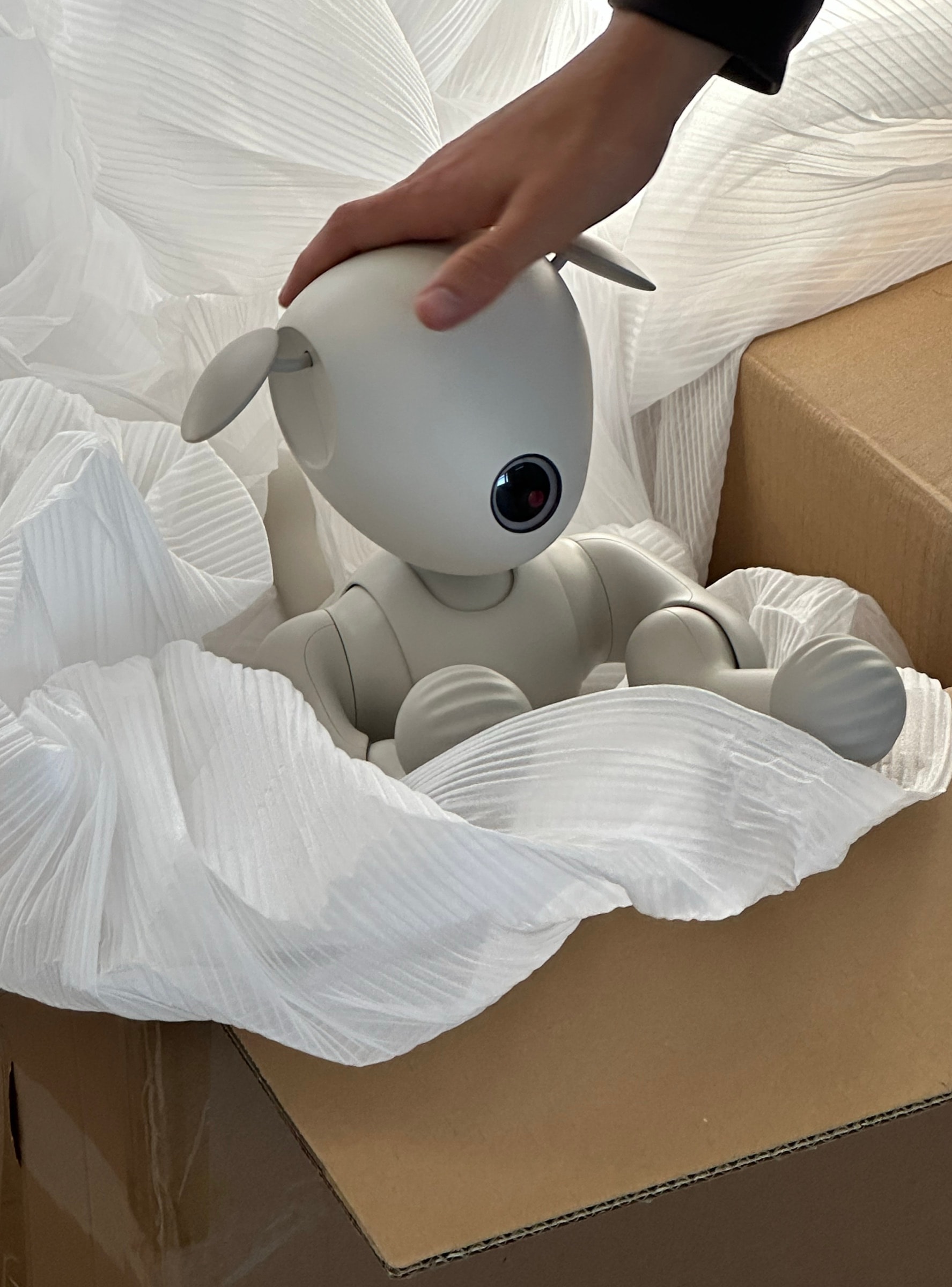
Bingo, a robotic creature designed to perceive its surroundings, move through the world, remember what it encounters, and express a personality. Design by Body Shop, engineering by Gentle Systems.
Here's a short breakdown of the engineering and thinking behind four of the systems that give Bingo a mind of its own: mobility, sensing, expression, and memory. And what it took to fit them all inside one small body.
After all, a wild computer deserves an equally wild amount of imagination.
Key Challenges
Mobility How do you make a robotic dog agile enough to jump, yet structurally stable enough to walk and explore on its own?
Sensing Where do you fit the sensors Bingo needs to remember the world, inside such a small space?
Expression What kind of expression allows this robot to become a valued companion?
Memory Which information should Bingo remember, forget, and be able to relearn?
Roaming about
Taking computing for a walk
Bingo is engineered to make ordinary movement feel natural.
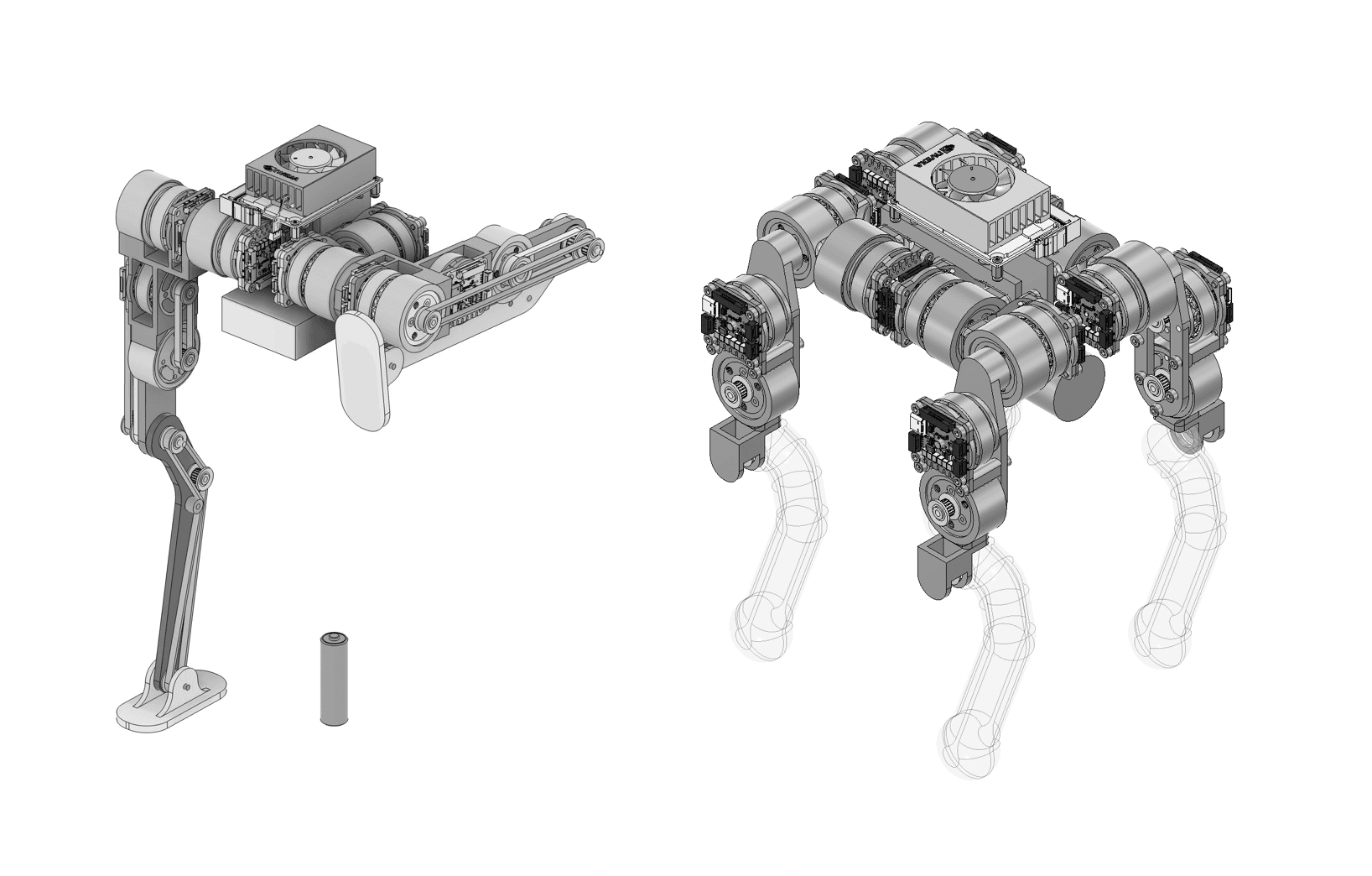
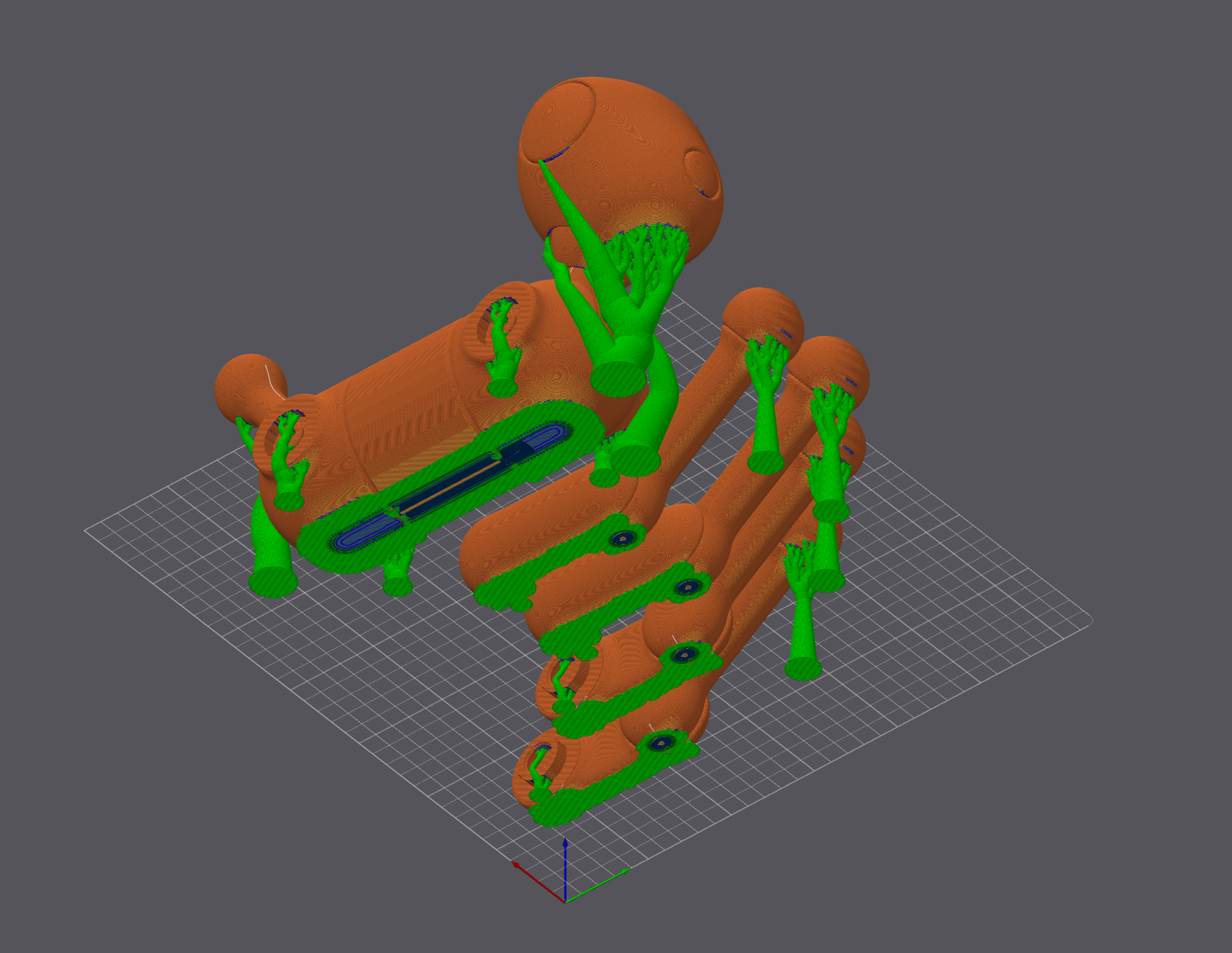
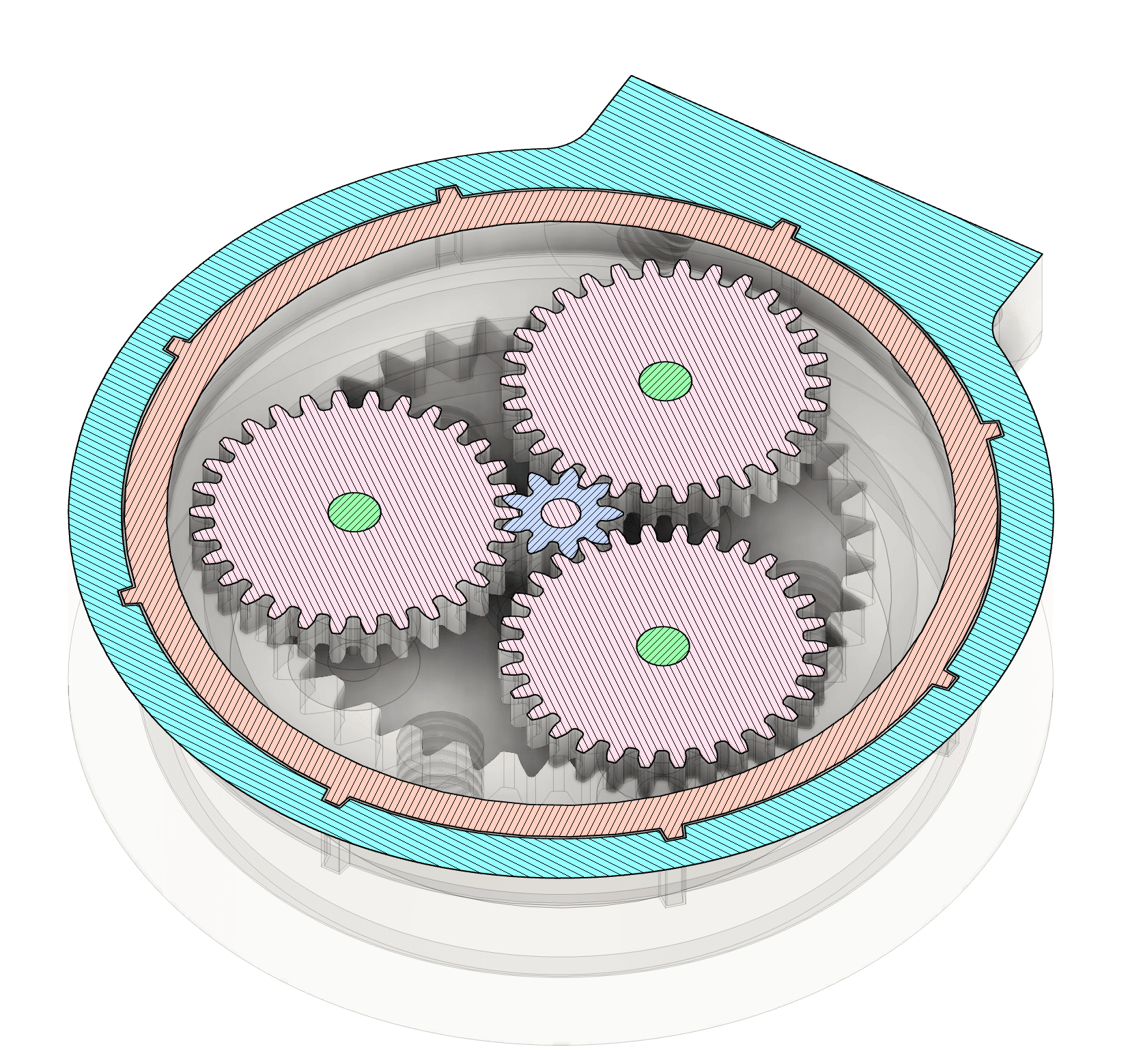
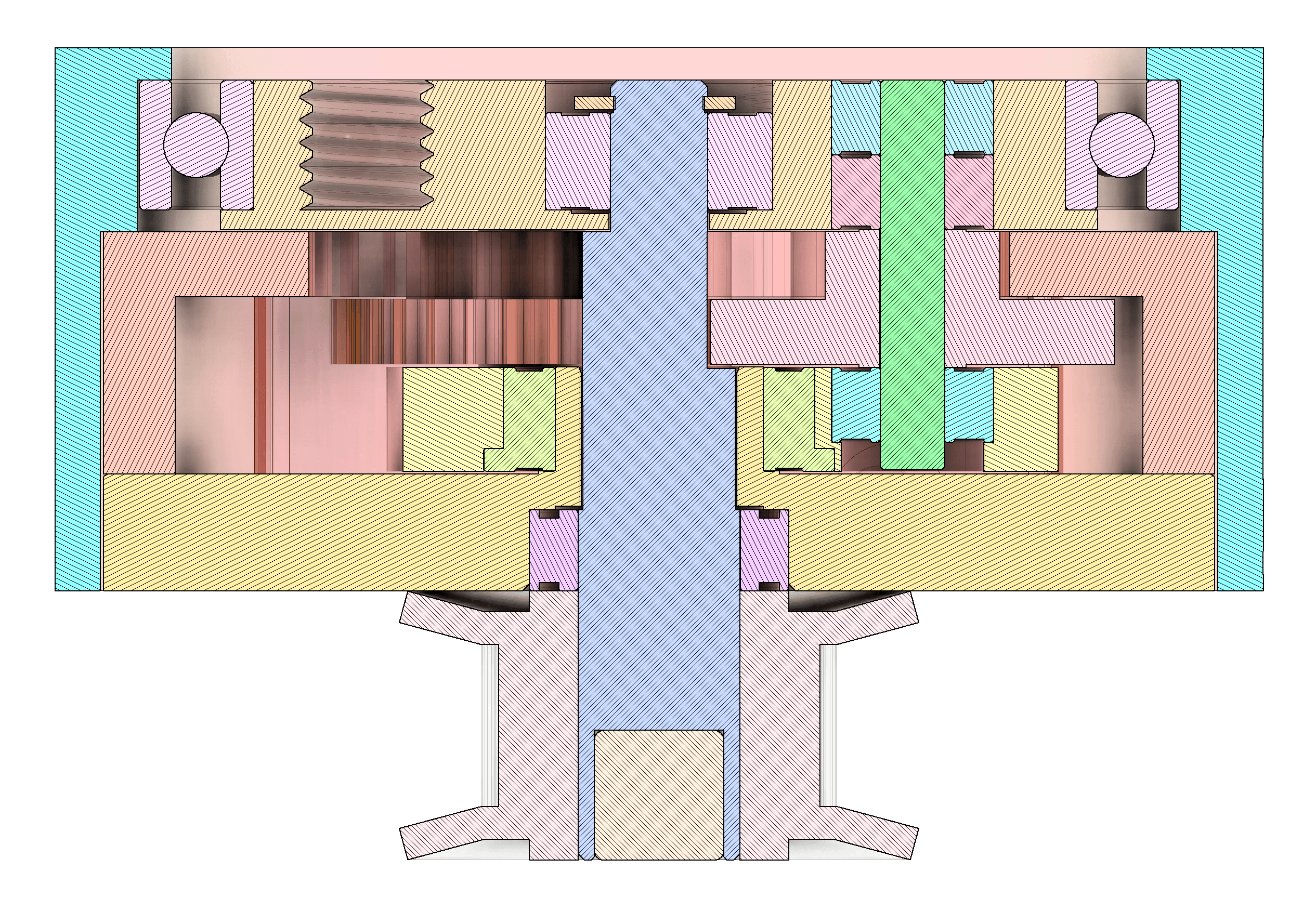
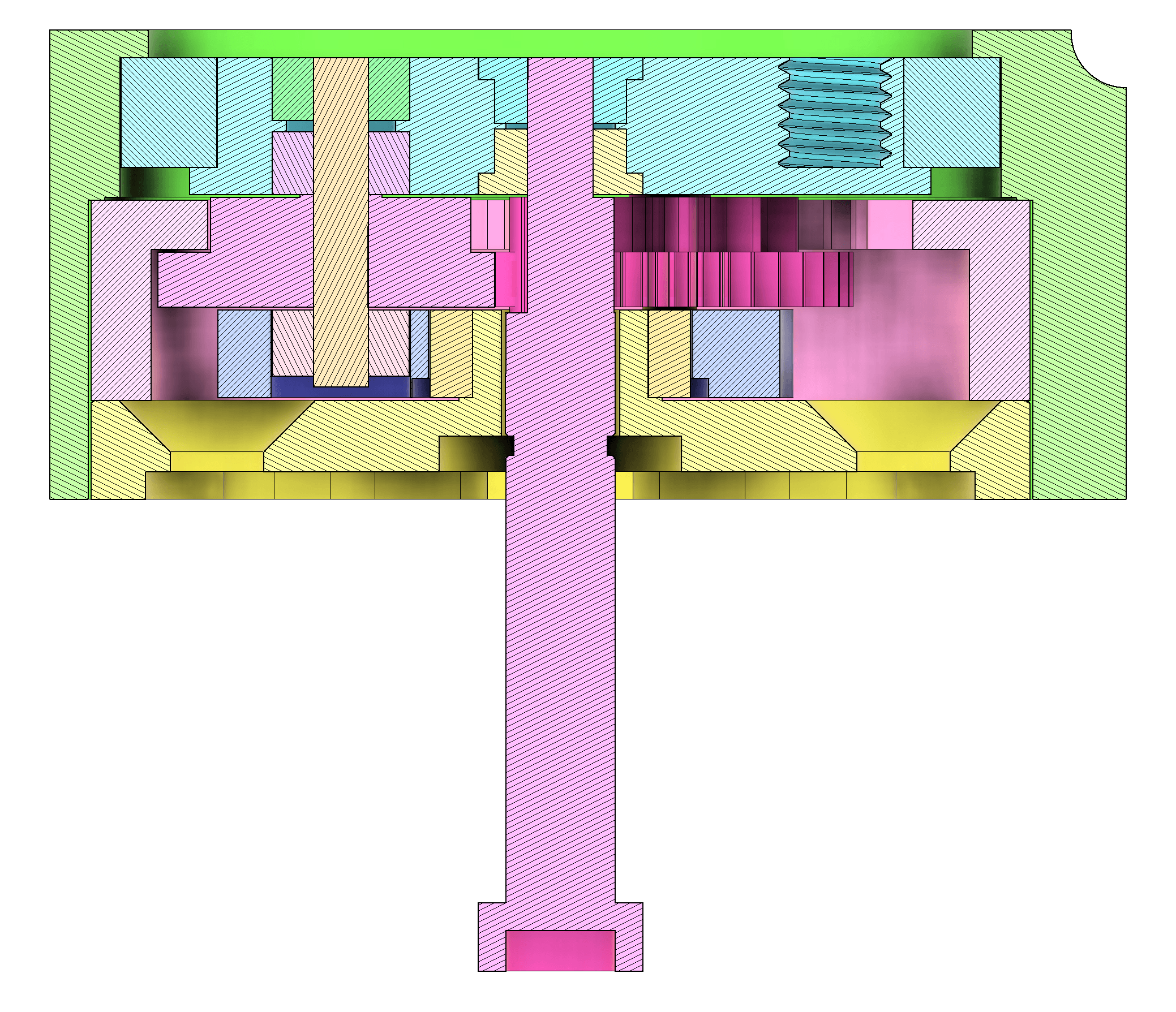
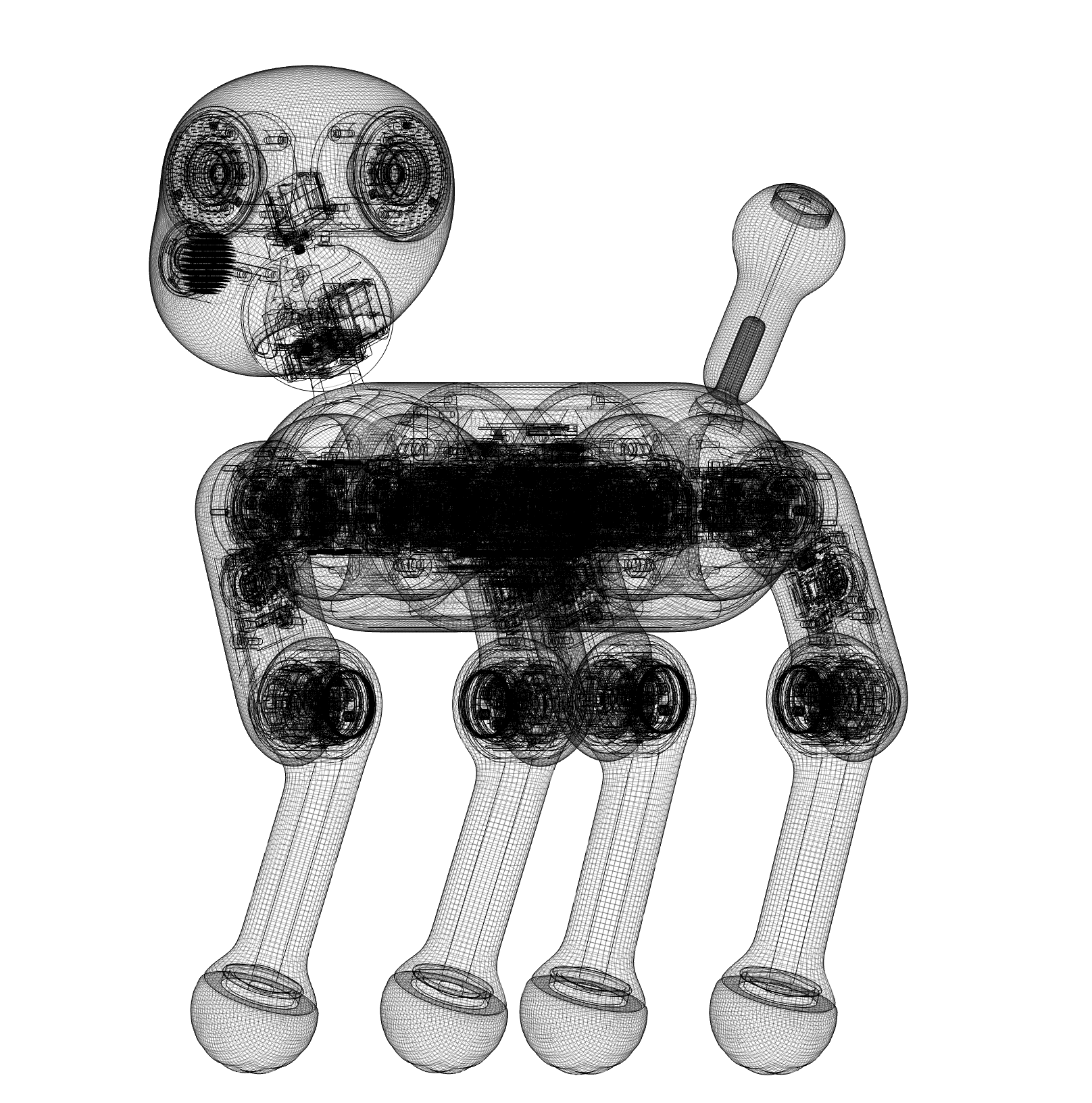
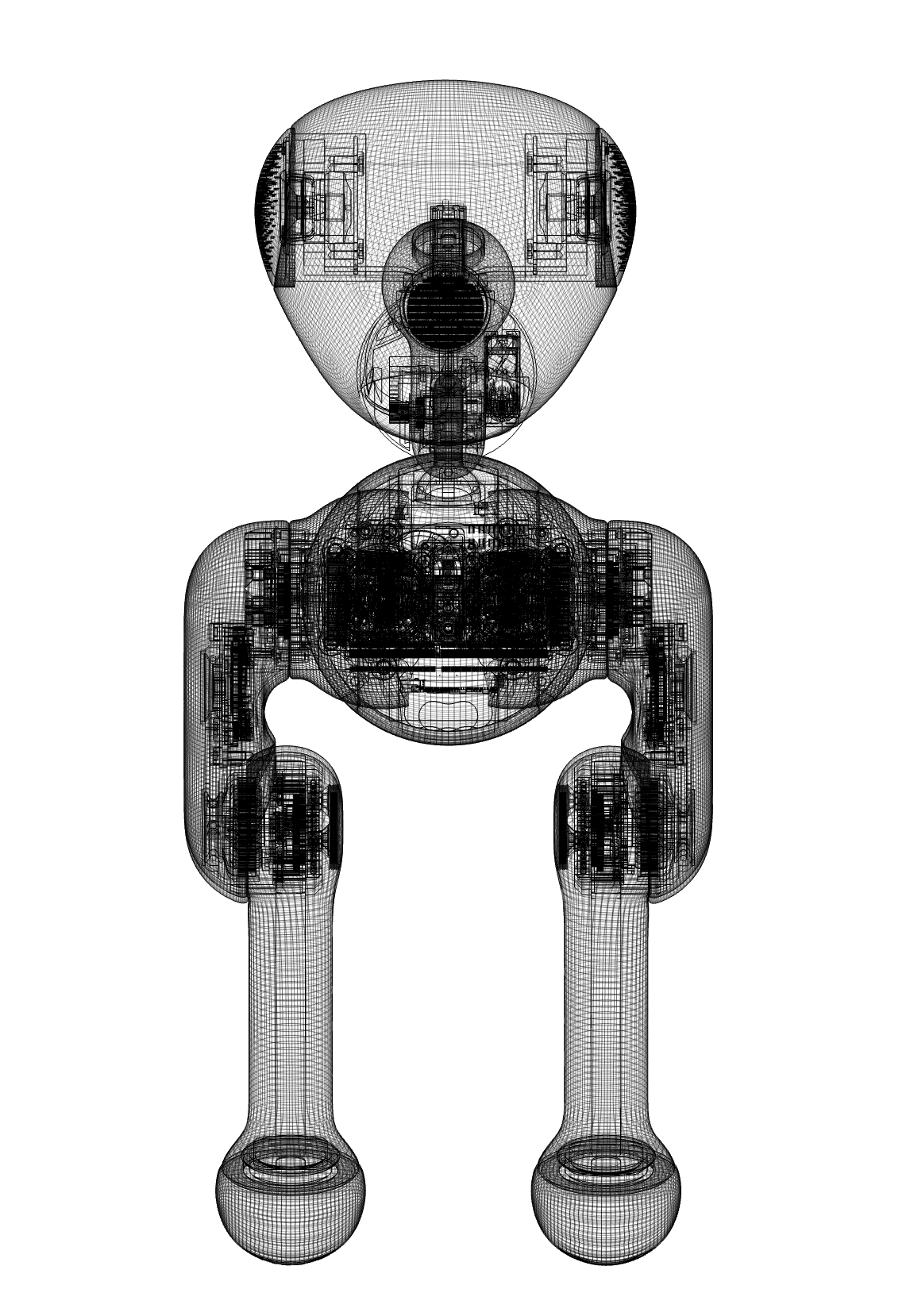
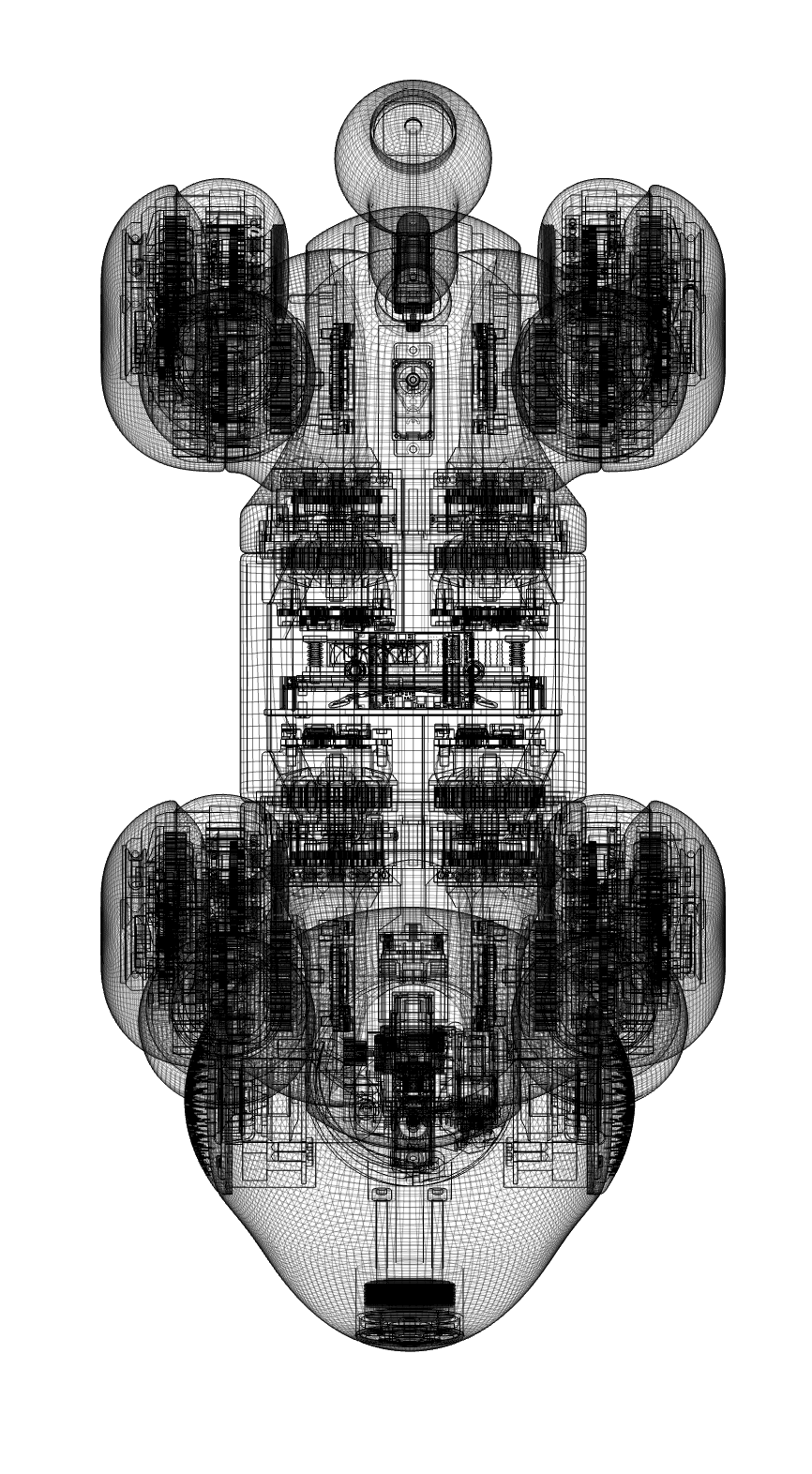
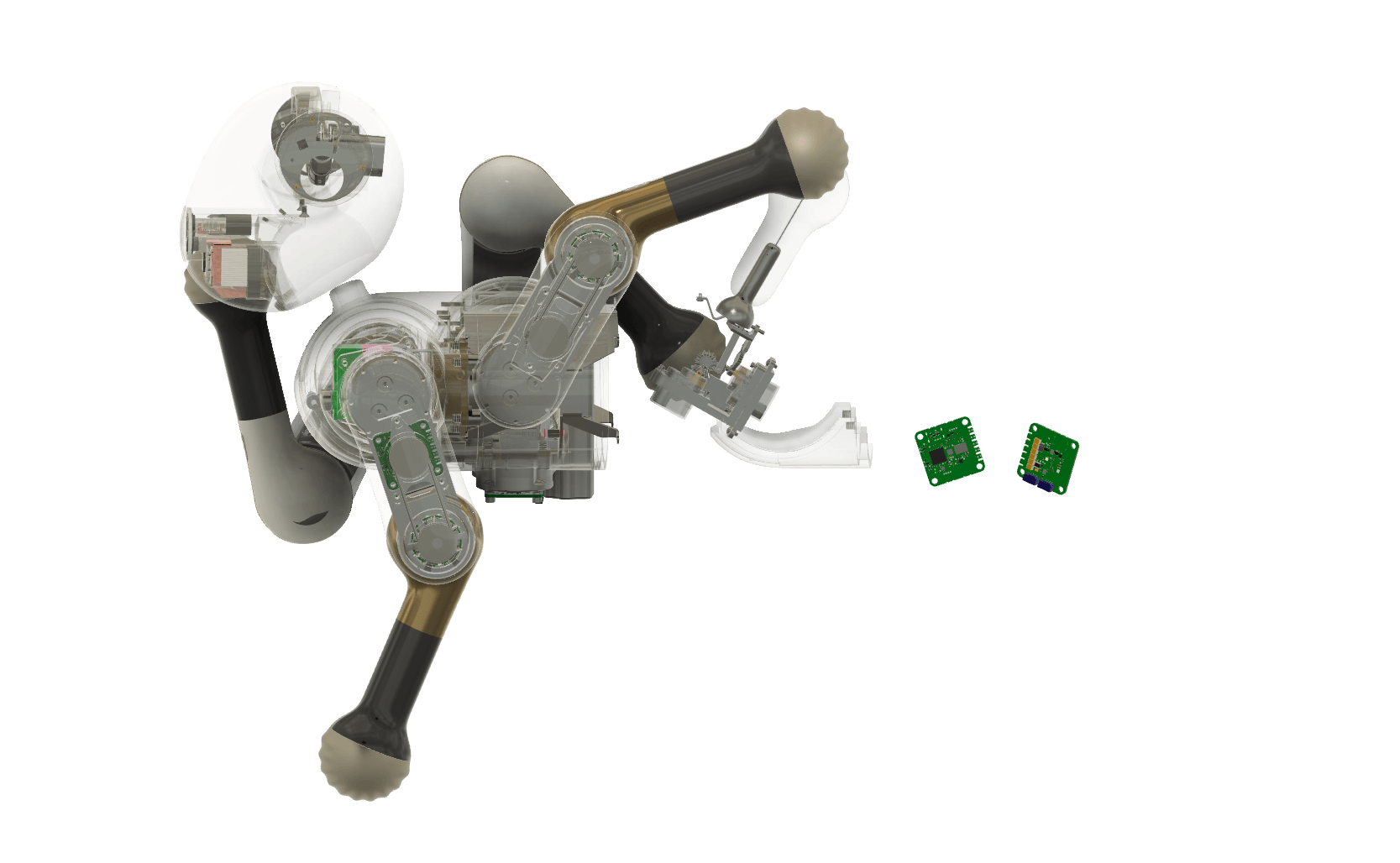
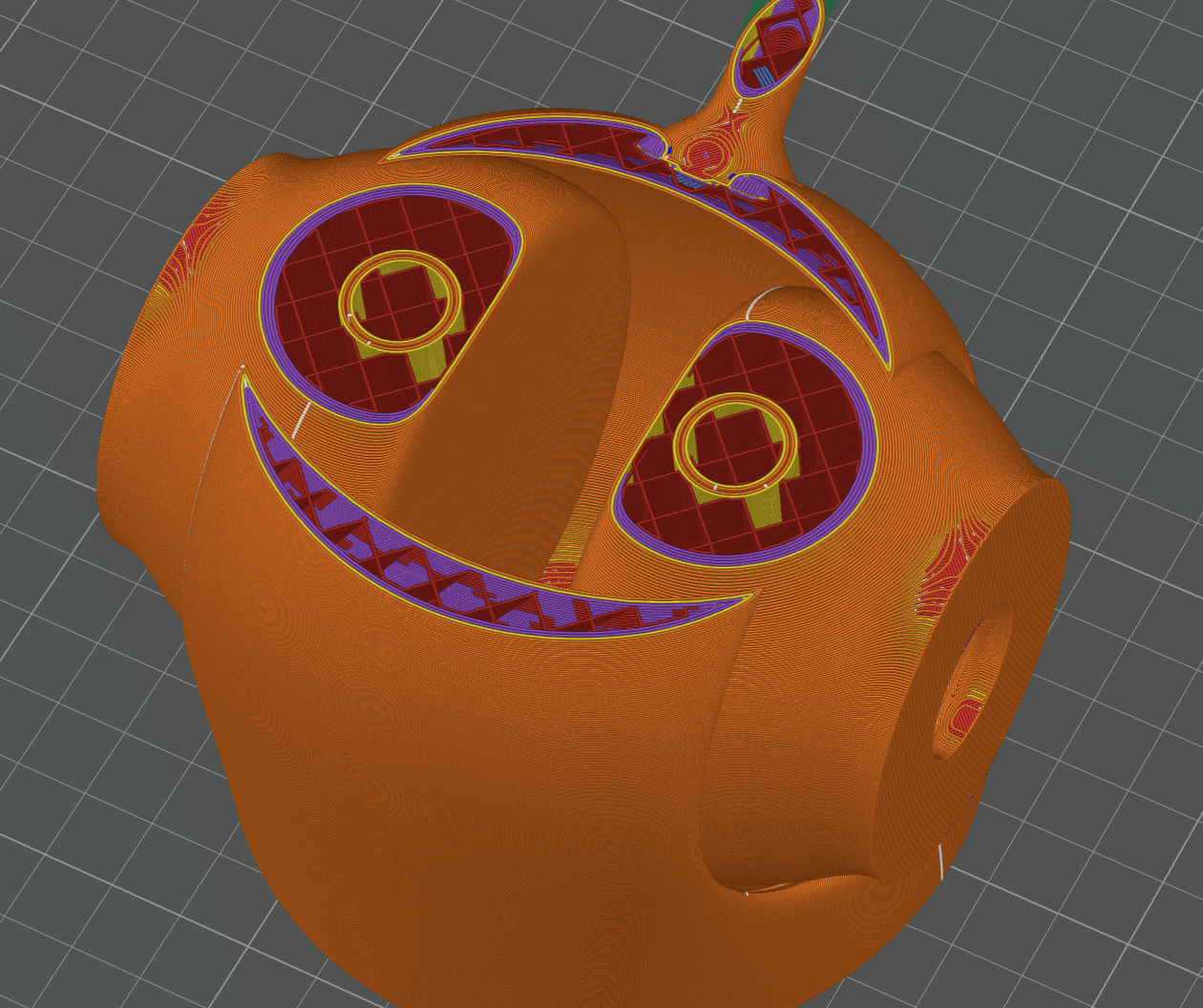
Twelve custom actuators give each leg three axes of movement, while drone motors, compact gearboxes, lightweight polymers, and hollow 3D-printed parts keep power high and weight low. Every gram saved means more room for batteries, more time roaming, and enough strength left to jump.
That range turns locomotion into expression. The same hardware that gets Bingo across a room lets it communicate attention, excitement, hesitation, and curiosity through the way it moves.
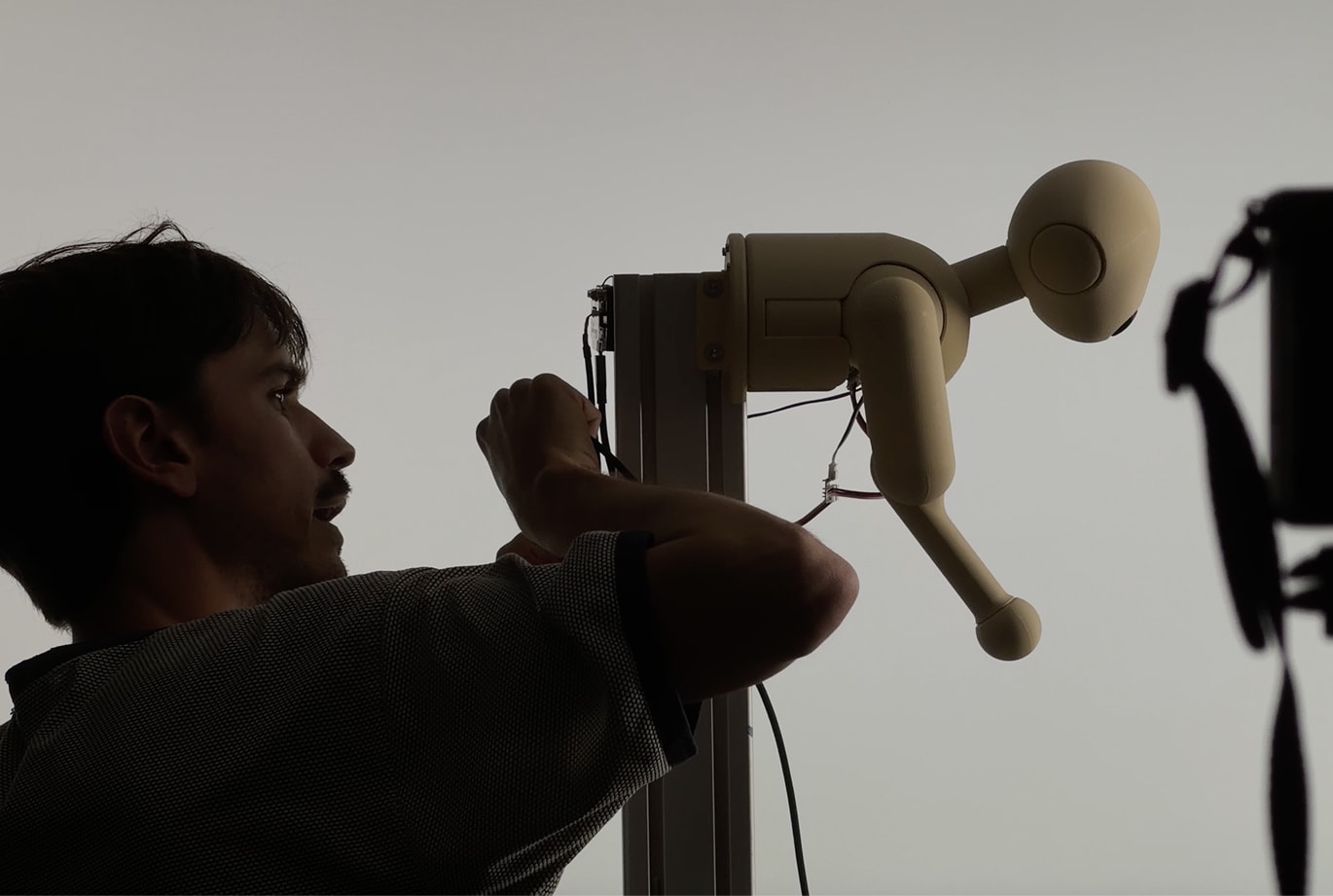
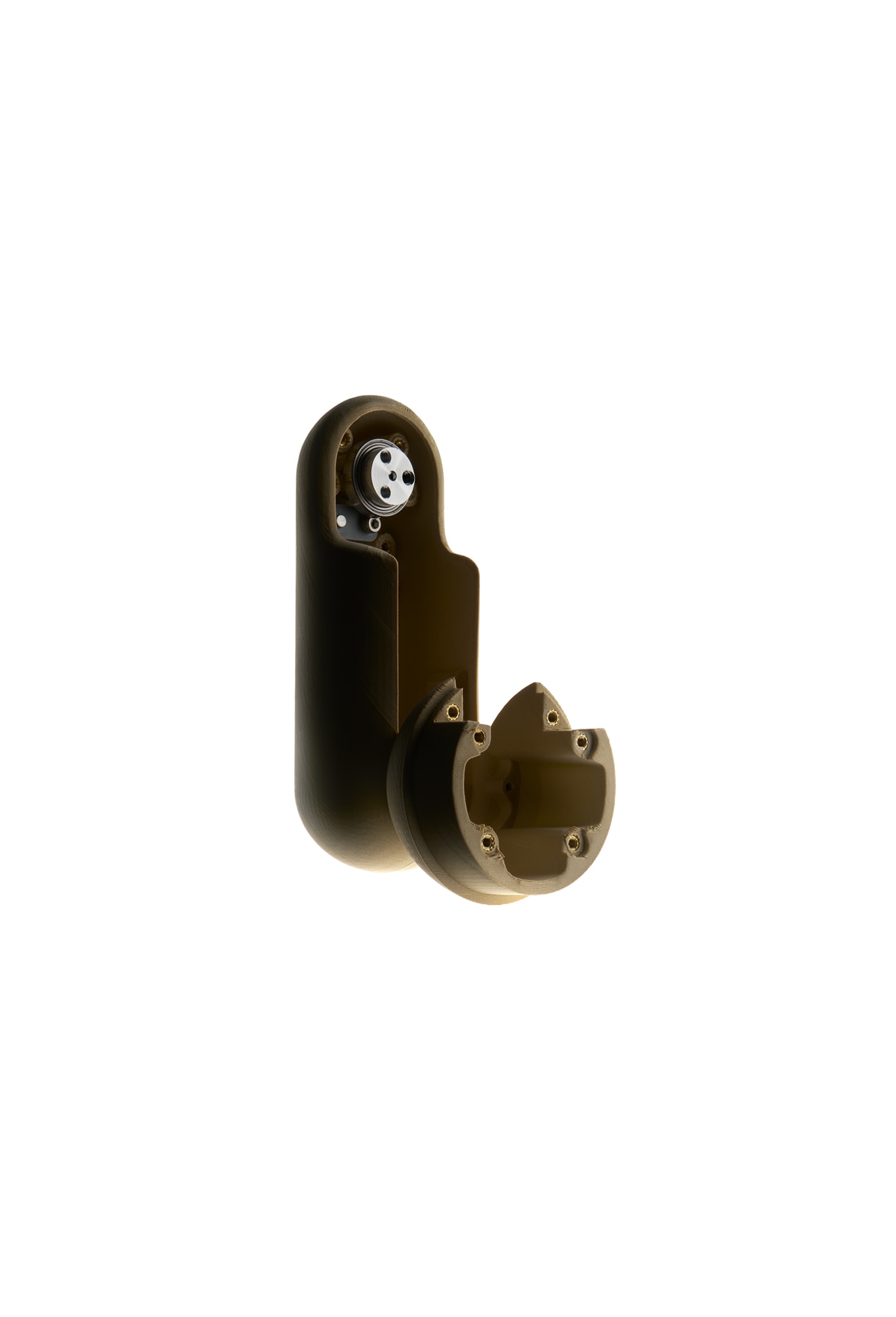
Miniaturization Custom Gear Box
Shoulder Joint Ball Axis Freedom
Nest Charging Contact Pins
Reinforcement Learning Adapts to Environment
Reinforcement learning, locomotion.
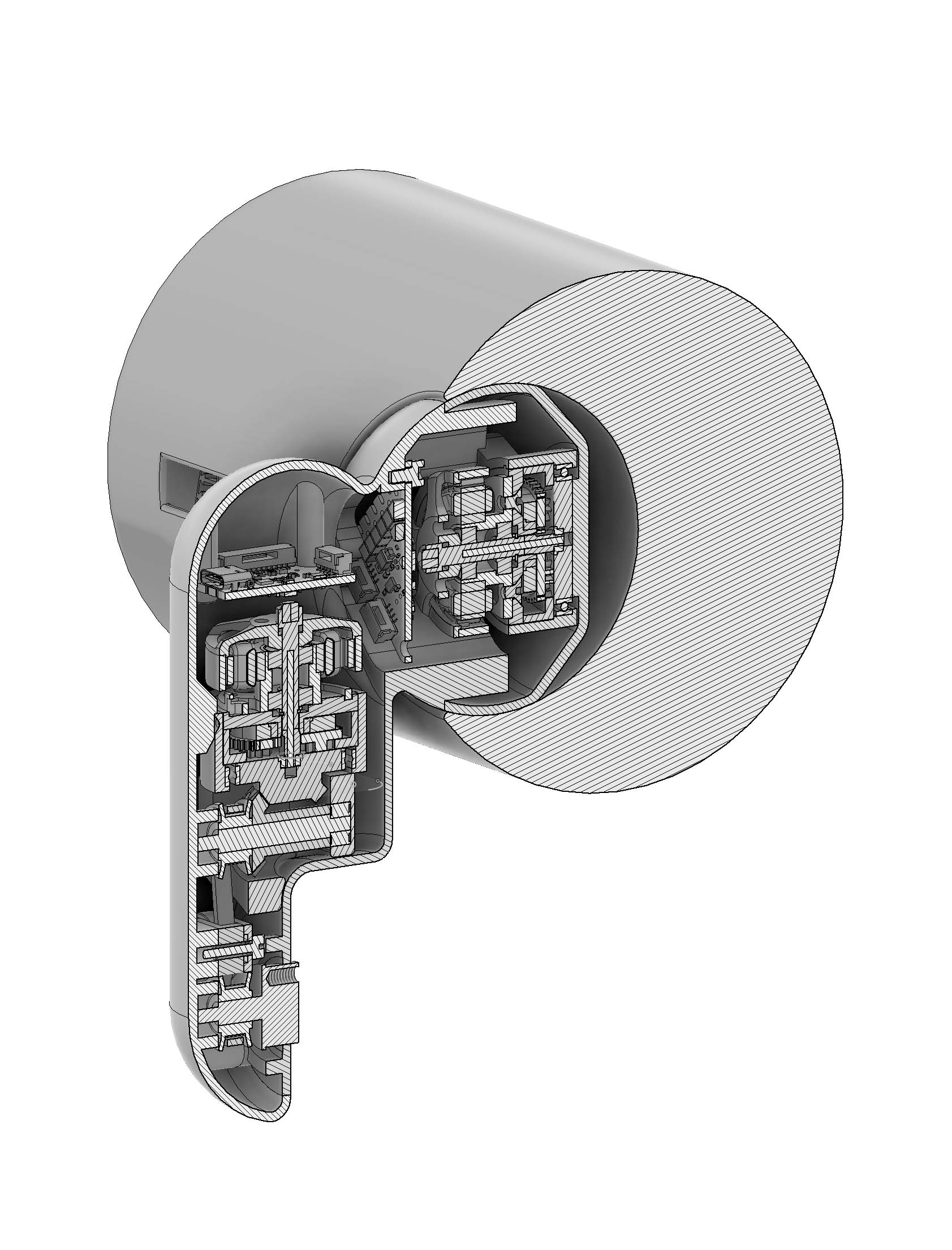
Leg architecture.
Leg-joint mobility.
Locomotion proof of concept.
Can unpredictability give a machine character?
Predictability makes machines easier to engineer, but it can also make them feel mechanical. For Bingo, a degree of unpredictability creates room for personality to emerge: unexpected movements, changing interests, and moments that feel discovered rather than programmed.
Bingo is also designed to be small — a kind, gentle companion, and its size reflects that. But a companion needs more than gentleness to feel like one: it needs character. And character needs room to be a little autonomous — to explore, move between floors, and keep a sense of what's happening around it.
A sense of the world
Competing for millimeters to enable perception
Before Bingo can remember, wander, or develop opinions, it first has to pay attention.
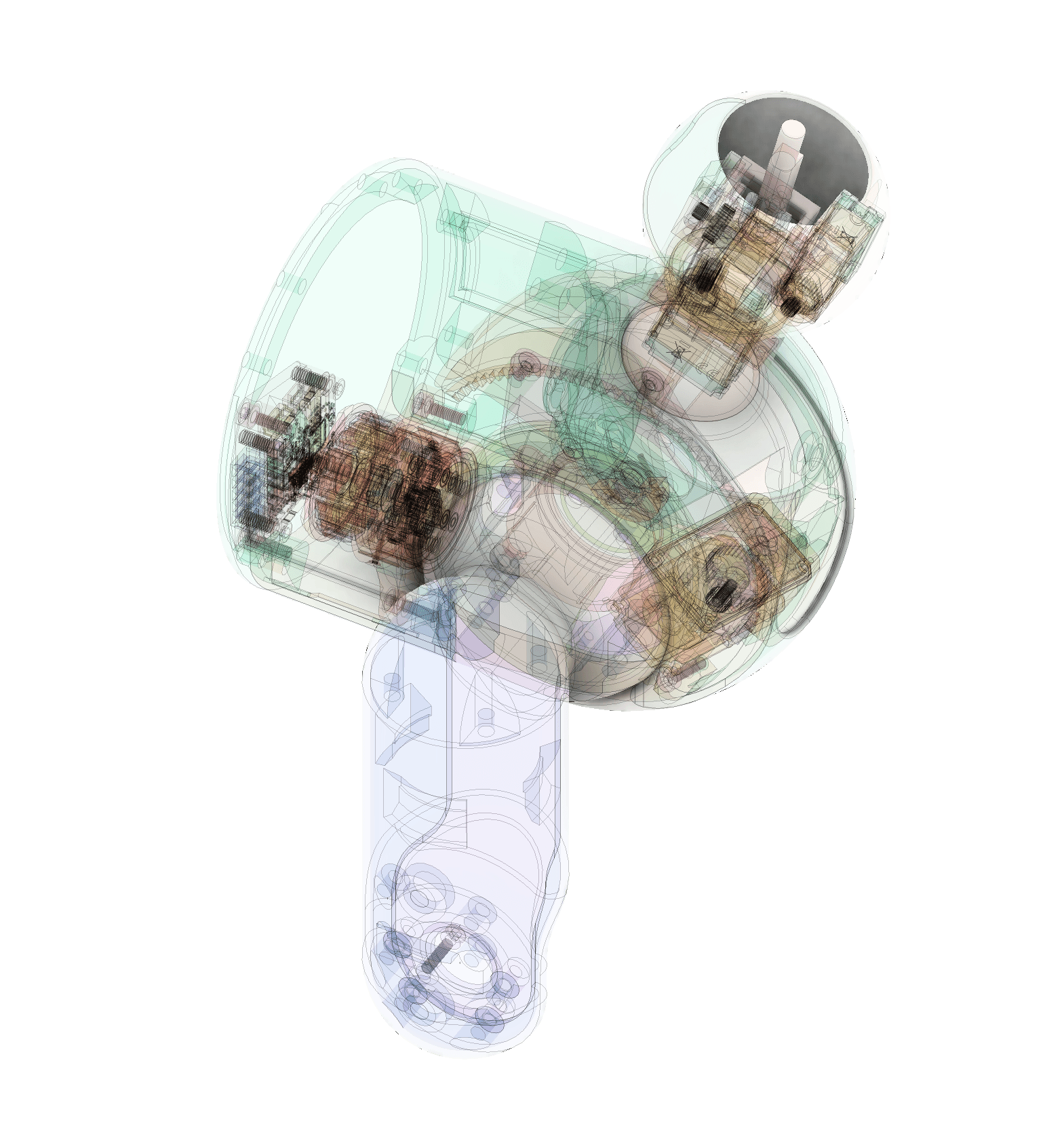
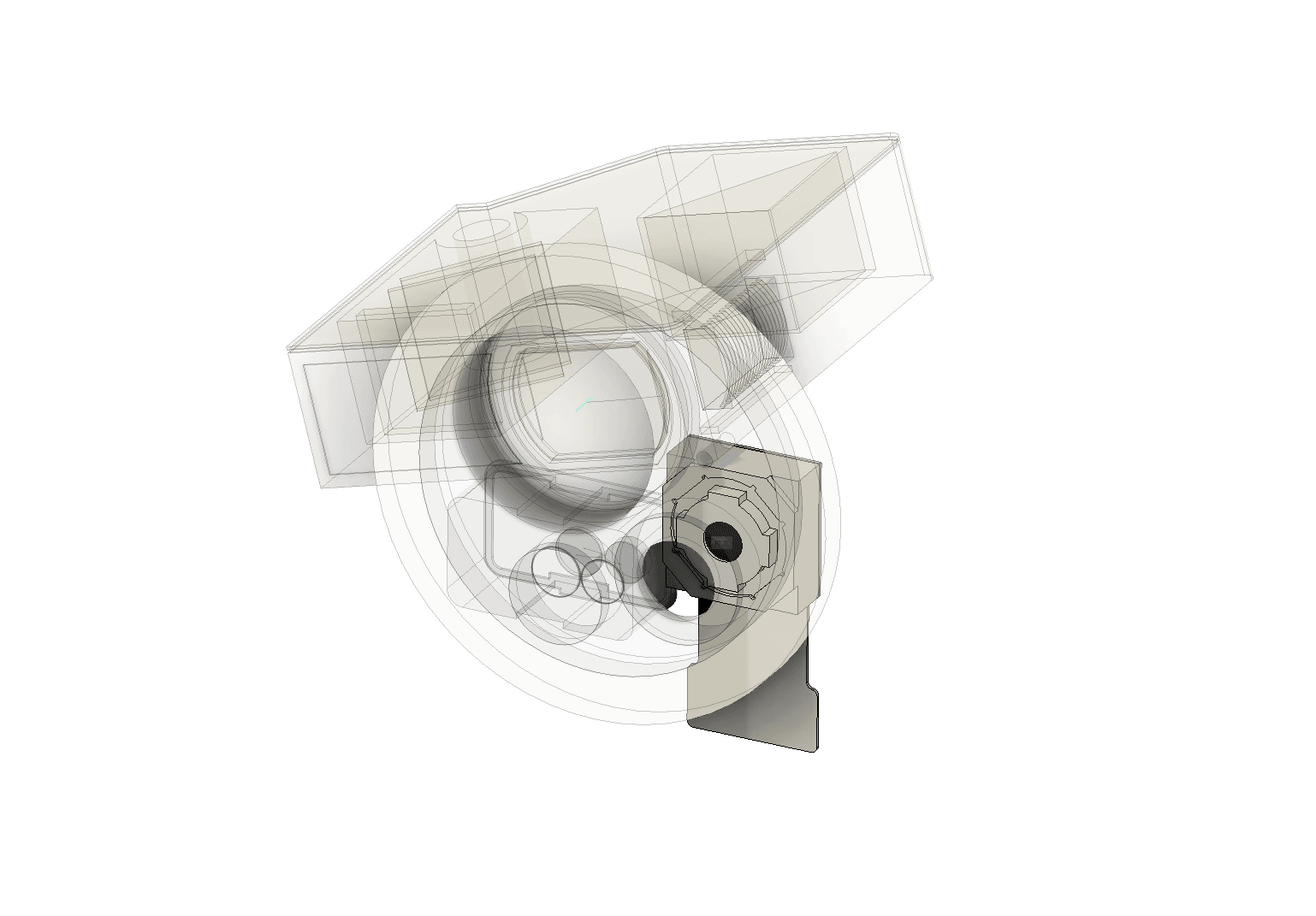
Inside a head roughly the size of a small pomelo, sensors compete for millimeters. LiDAR maps the space around it; RGB, depth, and infrared cameras extend its vision; and a spatial microphone array lets sounds become points of interest before they enter view.
POV
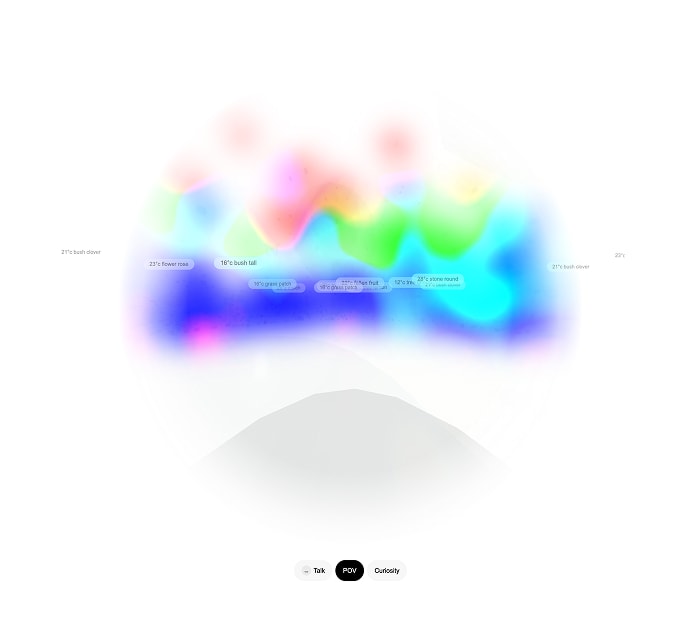
Vision Hardware
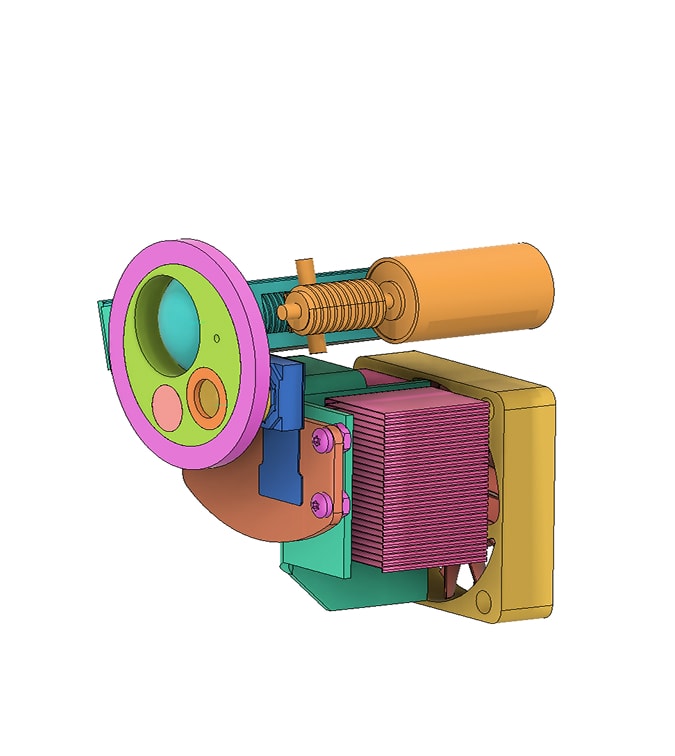
Memory View
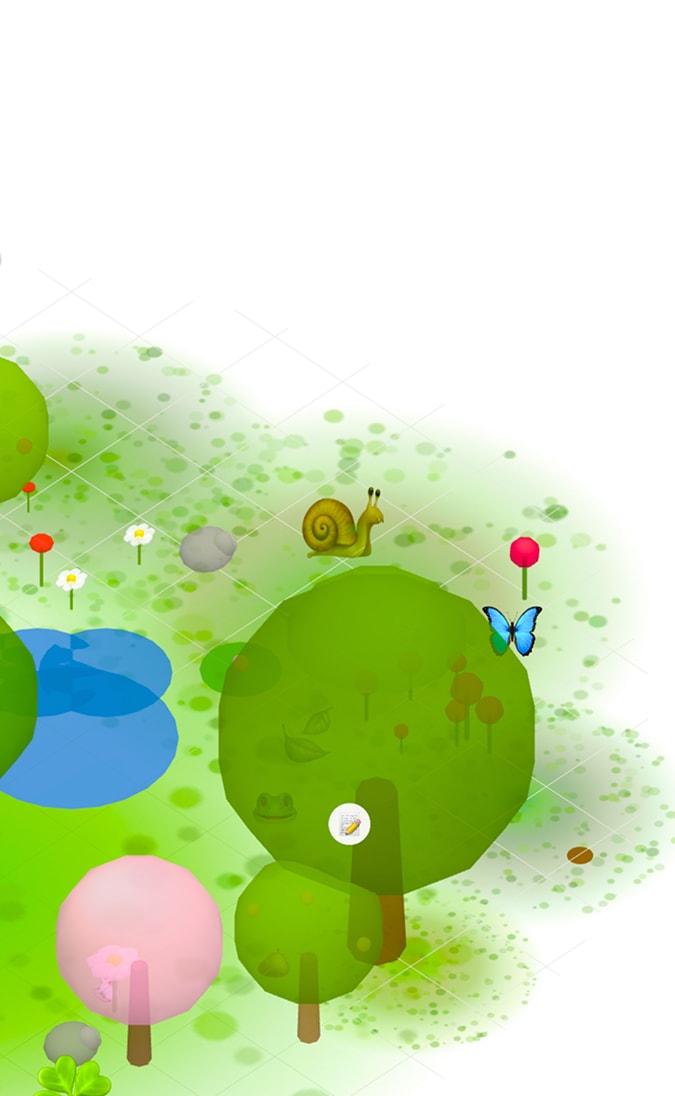
Immediate World View
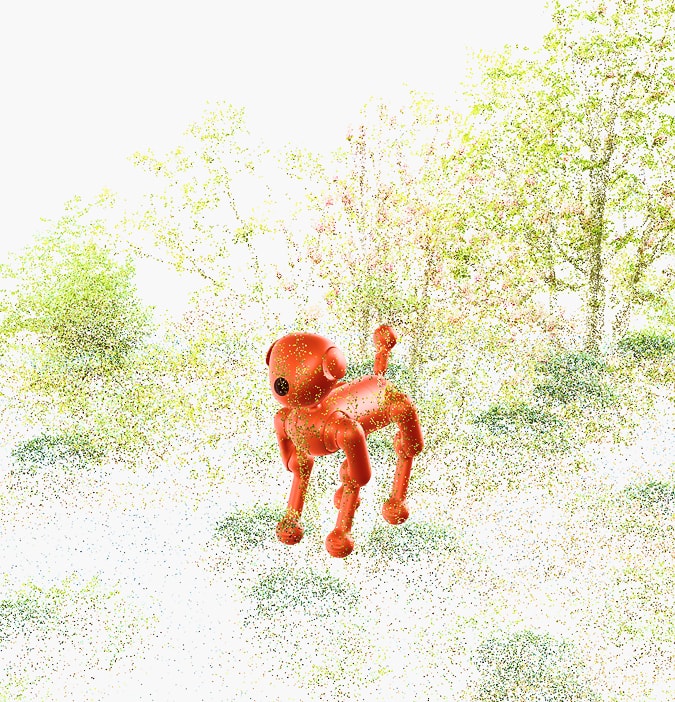
More unusually, Bingo can smell. A carbon nanotube sensor detects subtle changes in the air, picking up traces that precede things and linger after they're gone. Capacitive, motor, and ground-force sensors complete the picture through touch, resistance, balance, and impact.
Together, these systems give Bingo the layered sense of the world, memory will need to work with. Fitting them all meant every component had to earn its place.
Taste remains an unsolved problem.
Showing feelings
Complex mechanics for simple gestures
To be an emotionally intelligent robot, Bingo needs to understand the world and make itself understood.
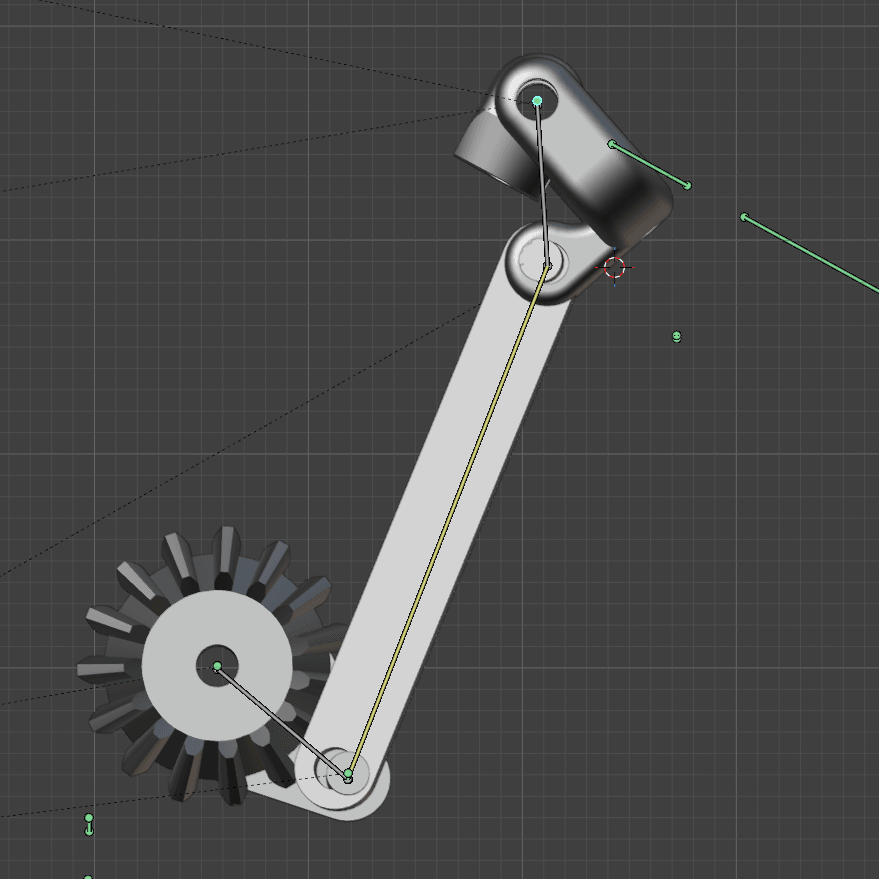
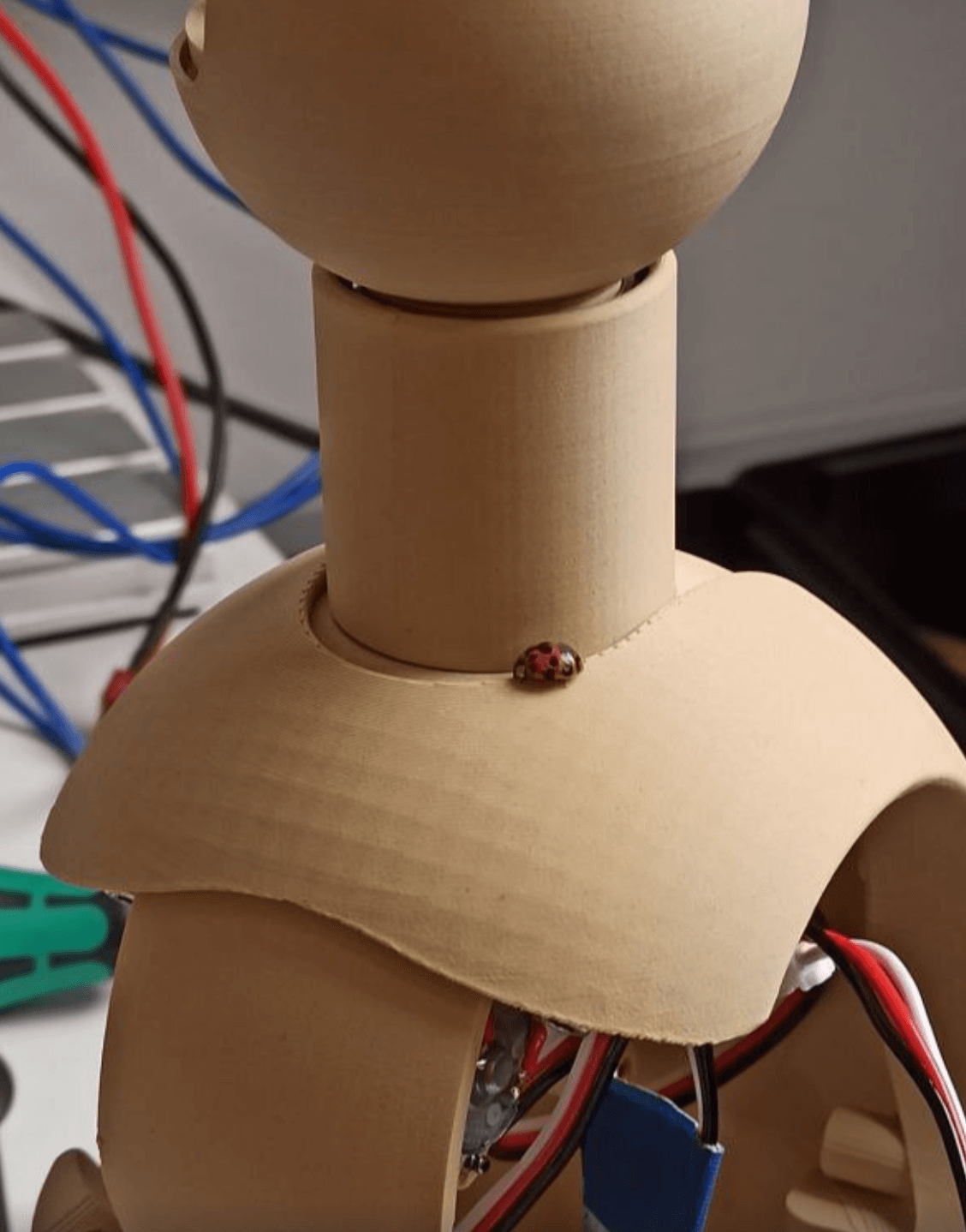
Eight degrees of freedom turn small movements into a language of their own. Ears swing with attention, a tail wiggles with excitement, and a slight tilt of the head can change the tone of an interaction. Underneath, intricate linkages and tightly packed actuators make these outwardly simple gestures possible, while remaining almost entirely hidden from view.
When a gesture isn't enough, Bingo can place its thoughts directly into the world. A projector lets information, reminders, and observations appear wherever they're relevant. Keeping it cool required one of the largest systems inside Bingo's head, with dedicated airflow, cooling ribs, and carefully concealed vents.
Across both, one principle remains: hide the complexity, show the feeling.
Neck joints.
Ear mechanism.
Tail motion.
Remembering like we do
Designing for imperfect recall
Remembering everything is not natural. Perhaps a little creepy, even.
Bingo moves through the world gathering a rich register of reality in color, depth, sound, and smell. But storing everything would create both a privacy problem and a storage one. So rather than treating memory like a recording device, we designed it to behave more like our own.
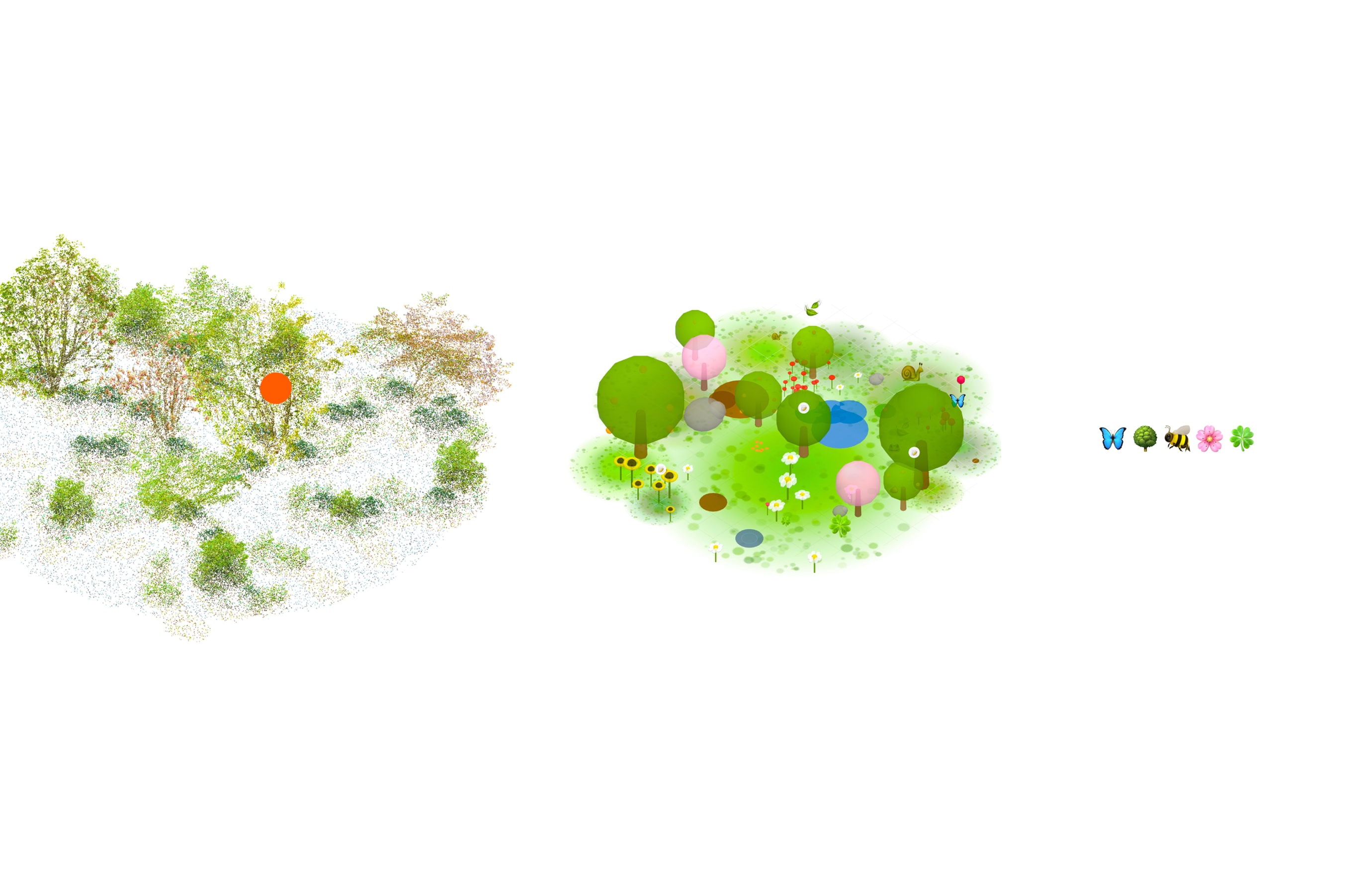
Perception begins at the highest fidelity available — but only for as long as it's useful. Once a memory has served its function, its fidelity begins to fade: partly to shape character, keeping what matters and letting the rest blur, and partly as a safeguard, protecting privacy and staying within the bounds of data law. A Gaussian splat becomes a point cloud. A point cloud becomes a low-poly scene. A low-poly scene becomes a string of emojis. Eventually, even those disappear.
What remains might be a vague recollection. A preference. An affinity for something Bingo can no longer fully trace back.
The result is a memory architecture designed around what to keep and what to let go.
Bingo is still learning, and so are we. What began as an exercise in turning a computer into a companion has opened up much bigger questions about what happens when technology can move through our world, pay attention to it, remember parts of it, and develop ways of expressing itself.
Learn more about Bingo on the Moving Parts website and follow its journey from lab to home.
Moving Parts
Design and Concept
Body Shop Joe Tsao, Calvin Lien, Ben Levinas
Engineering and Tech
Andrea Marsanasco Industrial Design, Prototyping
Ingur Boetger Technical Lead, Engineering
Lucas Teixeira Design Direction, Documentation, Interactive Experiences
Cloud Garden CC license